The two week wait, the stretch between ovulation and the day you can actually test, is one of the strangest parts of trying to conceive. Nothing about your daily life changes, yet every twinge, ache and mood swing suddenly feels like it might mean something. Here is the honest version: most of those signals cannot tell you anything yet, and there is real research explaining exactly why, not just an assurance to "stay calm."
This guide is built entirely on real, checkable research (the NHS, and peer-reviewed studies published in journals including the New England Journal of Medicine, Human Reproduction and the Journal of Clinical Epidemiology), and it says plainly where the evidence is strong, where it is genuinely reassuring, and where popular "symptom spotting" advice does not hold up.
If you are trying to conceive right now, we have put together a free Nutrition Guide, written by Sarah, with practical, realistic advice on eating well, real food swaps, and a calm, no-overwhelm approach for exactly this stage.
How Long Is the Two Week Wait, Really?
"Two week wait" is a convenient name, not a precise one. It refers to the luteal phase, the stretch from ovulation to your next period, and it has long been treated as a fixed 14 days. Real cycle-tracking data says otherwise. A 2024 study in Human Reproduction that followed healthy, pre-screened women for a full year found genuine variability in luteal phase length, both between different women and from cycle to cycle in the same woman. Read the study.
Older research backs this up from a different angle. A prospective study that tracked 1,060 real cycles from 141 healthy women found the average total cycle length was 28.9 days, with 95% of cycles falling between 22 and 36 days, and more than 7 days of variability within the same woman in 42.5% of participants. Across the literature, the luteal phase itself typically runs somewhere between about 7 and 17 days, not a flat two weeks for everyone. Read the review.
None of this means your own wait is unpredictable in a way that helps you feel better about it. It means the countdown a symptom-tracking app gives you is a population average dressed up as a personal deadline, and it is worth holding that loosely rather than treating day 14 as a hard rule.

What Is Actually Happening Inside Your Body
The most detailed real data on this comes from the North Carolina Early Pregnancy Study, which had 221 women trying to conceive record daily urine samples so researchers could pinpoint, hormonally, exactly when implantation happens rather than estimating it. The finding: implantation occurs across a real window of 6 to 12 days after ovulation, not on one fixed day. Read the study.
The same cohort revealed something worth knowing honestly rather than glossing over: of the pregnancies detected by daily hormone testing, sensitive enough to catch a pregnancy days before any home test could, about 25% ended in an early loss before it would ever have been clinically recognised. This is not a reason for alarm about your own cycle. It is the real reason doctors do not encourage testing before a missed period: a huge share of what a very early, ultra-sensitive test would catch resolves on its own within days, often before you would have known to worry.

Only after implantation does the body begin producing hCG (human chorionic gonadotropin), the hormone every home pregnancy test is actually looking for. Nothing before that point, no matter how you feel, can be detected by a test, because the hormone simply is not there yet. NHS guidance.
Why Symptom-Spotting Doesn't Work, and What the Data Actually Shows
"Symptom spotting," poring over every ache for a sign, is close to a rite of passage during the two week wait. It is also, according to real prospective data, not something that works, and the reason is straightforward biology rather than bad luck.
Progesterone rises after ovulation in every cycle, whether or not conception happened. That single hormone is responsible for most of what gets called an "early pregnancy symptom": breast tenderness, fatigue, mild cramping, bloating and mood changes. Because it rises the same way whether or not you are pregnant, these symptoms happen in ordinary, non-pregnant luteal phases too, not just successful ones.
The same North Carolina Early Pregnancy Study that mapped implantation timing also tracked symptom onset directly, comparing pregnant and non-pregnant cycles in the same real women rather than relying on recall. Two findings from it are worth sitting with. First, 9% of non-pregnant cycles produced three or more consecutive days of genuine pregnancy-like symptoms, meaning a meaningful run of symptoms proves nothing on its own. Second, and more strikingly, among the women whose cycles did result in a live birth, half did not notice any symptoms at all until 36 days after their last period, well past the point a test would already have told them, and 89% hadn't noticed anything by 8 weeks. Read the study.

In plain terms: by the time symptoms are reliable enough to notice, most people already have their test result. Symptom-spotting during the wait itself is, on the real evidence, closer to noise than signal, and that is genuinely good news, because it means there is nothing you are failing to notice and nothing wrong with you if you feel completely normal.
Implantation Bleeding: What It Really Looks Like
Light spotting around the time of implantation is real, but it is far from universal, and its absence means nothing. The same North Carolina research team followed up specifically on early bleeding: about 9% of pregnancies that continued to term had at least one day of vaginal bleeding within the first 8 weeks, and the great majority of those went on to a live birth. Read the study.
So implantation bleeding, when it happens, is usually reassuring rather than concerning. But most people notice nothing at all, and that is just as normal. Neither spotting nor its absence during the two week wait tells you anything reliable about the outcome on its own.
When to Actually Take a Pregnancy Test
This is the question the whole two week wait circles back to, and it has a real, evidence-based answer rather than a marketing one. A landmark analysis of the same daily-hormone dataset calculated the maximum possible accuracy a home test could ever reach at different points: on the day of a missed period, the best possible sensitivity is about 90%, because roughly 10% of real pregnancies simply have not implanted yet by that point. One week after a missed period, that climbs to about 97%. Read the study.
A separate line of research, examined in a 2004 clinical review, measured exactly how much hCG a test needs to detect to be 95% accurate at each point after a missed period: about 21 mIU/mL to be reliable one day after, 35 mIU/mL two days after, and 58 mIU/mL three days after. Read the review. Most standard supermarket and pharmacy tests sit somewhere in the 20 to 25 mIU/mL sensitivity range, which is exactly why testing from the day your period is due, rather than several days before, gives you the real accuracy the box promises.

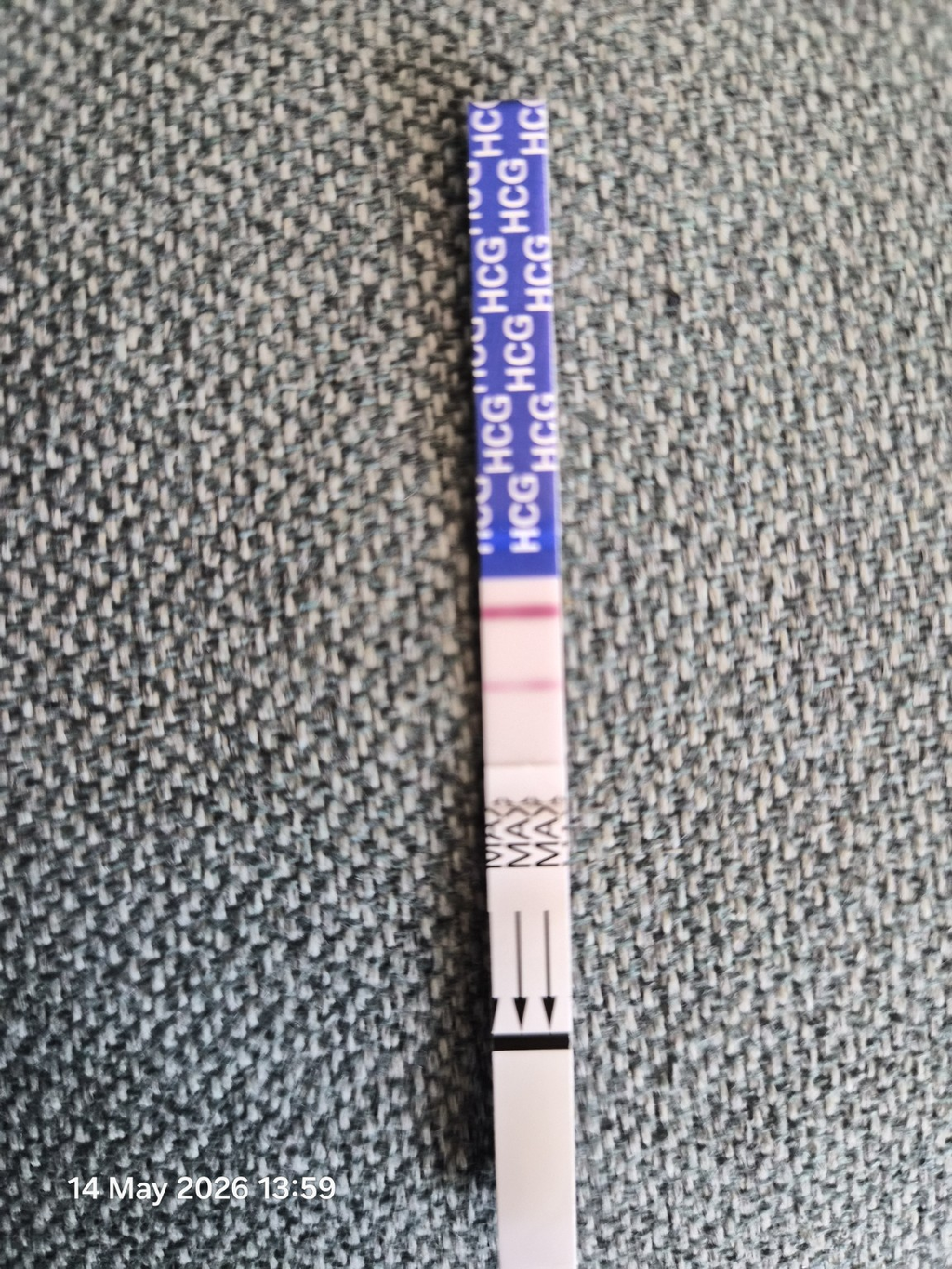
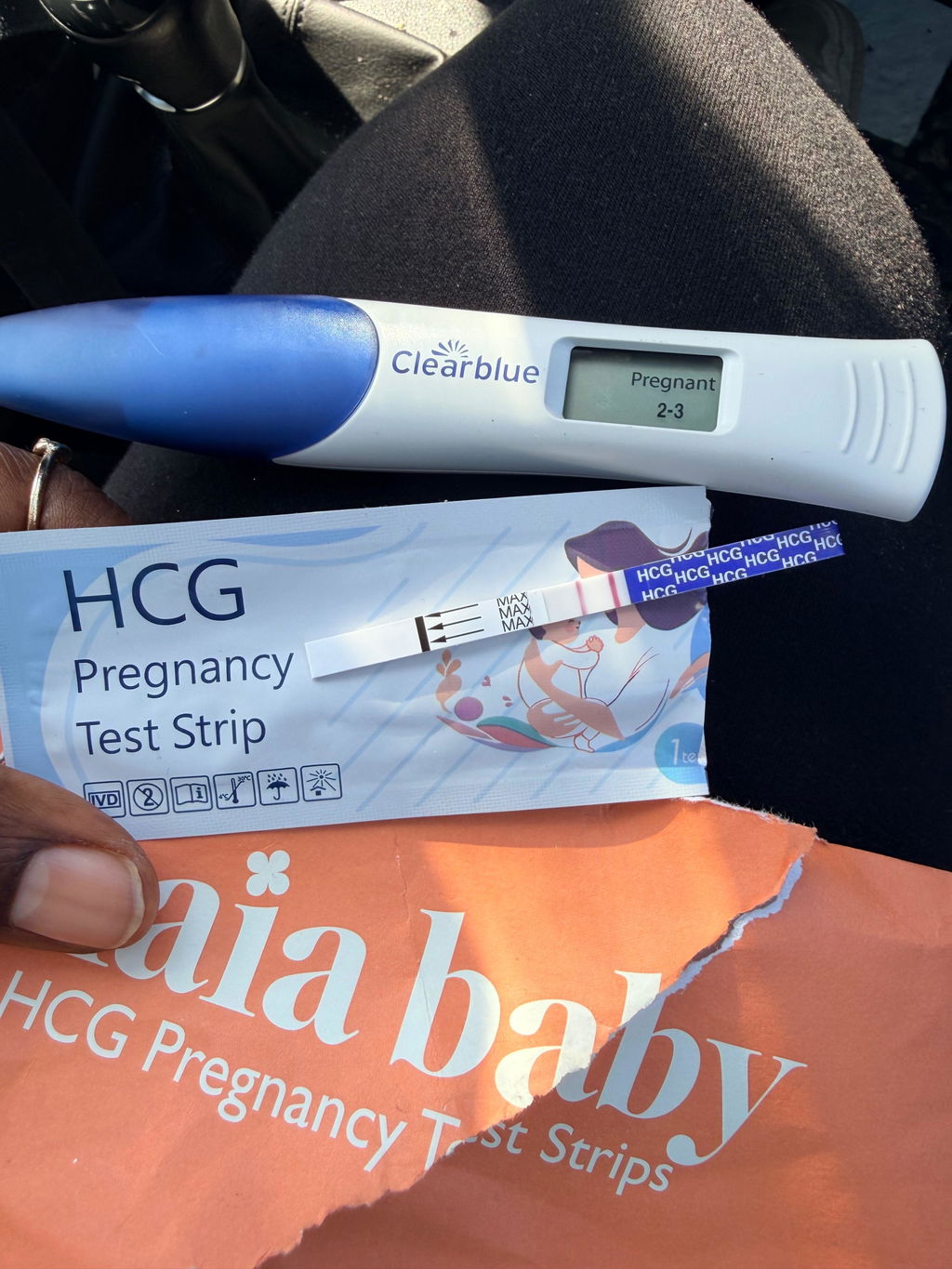
If you test early and get a negative, it does not reliably mean you are not pregnant, it may just mean hCG has not risen high enough yet. hCG roughly doubles every 48 hours in early pregnancy, so testing again in a couple of days with first-morning urine gives it a real chance to catch up. If you would like more detail on faint lines and evaporation marks specifically, our guide Evap Line vs Faint Positive covers exactly how to tell the difference.


When Can I Actually Test?
Enter your real dates below to see roughly where you are in the wait, and the actual day testing becomes reliable, based on the research cited in this guide, not a generic countdown app number.
Enter a date above to see your real countdown.
Coping With the Wait
Feeling anxious or impatient during the two week wait is completely normal, and there is real research on what actually helps rather than just "try to relax." A structured coping approach developed by fertility psychologists Jacky Boivin and Deborah Lancastle, built around positive reappraisal rather than distraction alone, was tested specifically for this exact kind of medical waiting period and found to genuinely help people reinterpret the wait in a more manageable way. Read the study design.
A few things worth doing with that in mind:
- Keep up normal activities. There is no need to be "extra careful." Moderate exercise like walking, swimming or yoga improves blood flow and genuinely reduces stress; you do not need to stop your regular routine, just ease off anything very intense for now.
- Eat well and stay hydrated. A balanced diet and plenty of water, with less caffeine and alcohol, supports how you feel physically and emotionally during the wait.
- Keep taking your supplements. Continue any prenatal vitamins or folic acid your doctor recommended. It is safe, and it supports early pregnancy health if this cycle is the one.
- Reappraise rather than suppress. Instead of trying to not think about it, the real evidence favours actively reframing the wait: "this is time my body needs, not time being wasted" tends to help more than distraction alone.
- Lean on people you trust. Share how you actually feel with your partner, a friend, or family. You do not have to carry the wait alone, and naming the anxiety out loud tends to shrink it.
- Limit your exposure to symptom forums. If comparing your symptoms to strangers online is making things worse, not better, given what the research above shows about how unreliable that comparison actually is, it is a reasonable thing to step away from.
- Avoid alcohol, smoking and recreational drugs during the wait, since there is no way to know yet whether this cycle worked.
If you had an insemination (IUI or an at-home method), it is worth knowing that some fluid may leak out afterwards, and that is completely normal, it does not mean anything went wrong. Our guide Sperm Leakage After Insemination: Is It Normal? covers this in detail. You do not need to lie still afterwards either; gentle movement is fine.
Two Week Wait Myths We're Retiring
A couple of specific, widely repeated claims about the two week wait, and what the real evidence, or lack of it, actually says.
- "Eating pineapple core helps implantation." The theory is that bromelain, an enzyme concentrated in the core, improves blood flow to the uterus. There are no published, peer-reviewed studies on people eating pineapple core to support implantation, and fertility specialists are direct about it: there is no evidence in the literature that consuming pineapple before or after ovulation improves implantation. Pineapple is a perfectly healthy fruit either way, just not on the strength of this particular claim. Read more.
- "You should rest and avoid activity after ovulation or a transfer." The opposite turns out to be closer to true. A 2022 systematic review and meta-analysis found no benefit from bed rest after embryo transfer, and one comparison found a live birth rate of 43.6% with bed rest versus 52.5% with early normal movement. Cochrane's own review reached the same conclusion: there is not enough evidence to support routine bed rest, and some data suggest it may be associated with worse outcomes, not better. Read the review. There is no need to change your normal routine during the two week wait; moderate movement is not a risk.
In Video: What's Actually Happening in Your Body
If you'd rather watch than read, this video from Dr. Natalie Crawford, a board-certified OB-GYN and fertility specialist, walks through the real physiology of the two week wait and implantation signs covered in this guide.
When the Wait Is Over
If your test is positive, congratulations, you're very likely pregnant. Book an appointment with your doctor or midwife to confirm the pregnancy and start prenatal care, and mention any medications or supplements you are already taking.
If it is negative and your period still has not arrived, you have real options rather than just waiting blindly. Ovulation can shift later than expected, so testing again in a couple of days is reasonable. If repeat tests stay negative and your period does start, this cycle simply was not the one, and that is worth taking a breath over rather than reading into. Our guide Best Time to Get Pregnant: When to Inseminate for Conception is worth a look if you want to double-check timing for next cycle.
It helps to remember that conception genuinely takes time for most people trying. If you are under 35 and have not conceived after 12 months of trying, or 35 or older and it has been about 6 months, it is worth talking to your doctor or a fertility specialist. Outside of those windows, this is a normal part of a longer process, not a sign that something is wrong.
Frequently Asked Questions
How long is the two week wait, really?
It is usually somewhere between 10 and 17 days from ovulation to your expected period, not a fixed 14 days. Real cycle-tracking research shows the luteal phase varies both between women and cycle to cycle in the same woman.
Can you actually feel implantation happening?
Some people notice light spotting or mild cramping around implantation, but most people notice absolutely nothing, and that is completely normal. Implantation bleeding, when it happens, occurs in only around 9% of continuing pregnancies.
Does symptom-spotting during the two week wait actually work?
No, not reliably. Real prospective data shows the same rate of "pregnancy-like" symptoms occurs in cycles that were not pregnancies, because the hormone driving those symptoms rises the same way regardless of conception. Among women who did conceive, half noticed no symptoms at all until after a missed period.
What is the earliest I can get an accurate test result?
The maximum possible accuracy on the day of a missed period is about 90%. That rises to about 97% a week later. Testing several days before your period is due carries a real risk of a false negative, not because nothing happened, but because hCG genuinely has not risen high enough yet.
I got a negative test but still have no period, what now?
Wait a couple of days and test again with first-morning urine. hCG roughly doubles every 48 hours in early pregnancy, so a negative test taken too early can become a positive within days if you are pregnant.
Keep Reading
Want more support with timing, testing, and the road ahead?
- Best Time to Get Pregnant: When to Inseminate for Conception
- Evap Line vs Faint Positive: How to Tell the Difference on a Pregnancy Test
- Sperm Leakage After Insemination: Is It Normal?
- Stress and Trying to Conceive: How to Cope During Your TTC Journey
- 9 Natural Ways to Boost Fertility
You're Not Failing to Notice Anything
There is no symptom, no feeling, and no amount of careful attention that can tell you the answer before your body is actually ready to. That is not a failure of awareness on your part, it is just how early hCG and implantation timing genuinely work. Whatever you feel, or do not feel, over these next two weeks says nothing about the outcome.
You have already done what you can this cycle. The rest really is just waiting.